Every person’s body carries its own unique history, including past injuries, postural habits, sports training, and even the sitting postures adopted both at home and at work. Every movement we make – from lifting a grocery bag to serving a tennis ball – depends on how well our musculoskeletal (MSK) system works.
Over time, daily habits, old injuries, work posture, and sports training can subtly change the way the human body moves. These small changes can build up silently, leading to musculoskeletal imbalances.
The movement story begins here. A musculoskeletal screening is the first step in understanding the story, which is the standard way to detect movement issues early.
What Is a Musculoskeletal Screening?
It’s a structured evaluation of bones, joints, muscles, ligaments, and movement patterns. Think of it like a “fitness and function check-up” for the body. It’s a comprehensive evaluation that examines:
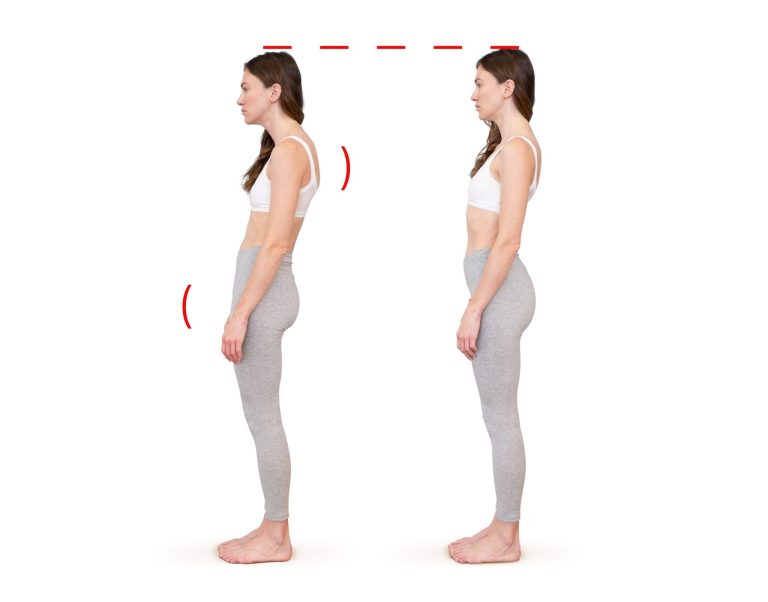
- Posture – checking spinal alignment, pelvic positioning, and shoulder symmetry,
- Joint health and range of motion – identifying stiffness, laxity, or movement limitations,
- Muscle strength and balance – finding muscle imbalances that need correction,
- Functional movement patterns – observing real-life tasks like squatting, bending, reaching, or walking to see how muscles and joints work together,
- Pain triggers and compensations – spotting movements that cause discomfort or showing compensation for weakness.
Why Is Musculoskeletal Screening So Important?
Slight imbalances often go unnoticed until they cause pain or injury. In this scenario, musculoskeletal screening helps in:
1.Early Detection
Most movement issues begin long before one feels pain. A screening can reveal:
- Weak stabilizing muscles (like the deep core or glute medius)
- Asymmetrical strength between the left and right sides
- Overuse patterns from sports or repetitive work
- Early joint stiffness from arthritis or past injuries
Research-backed Inputs: A 2020 systematic review in BMC Musculoskeletal Disorders confirmed that early identification of muscular imbalances and mobility limitations reduces the risk of injury and improves functional performance in both athletes and the general population.
2.Injury Prevention
- For athletes, screenings can identify high-risk movement patterns that lead to strains, sprains, and overuse injuries.
- For office workers, screenings can identify postural faults that contribute to neck and back pain.
- For older adults, screenings can help detect balance and mobility issues that increase the risk of falls.
Research-backed Inputs: Studies on the Functional Movement Screen (FMS) show that individuals scoring poorly are 2–3 times more likely to sustain musculoskeletal injuries if interventions are not made (Journal of Strength and Conditioning Research, 2014).
3.Better Recovery
- Screening can track recovery progress, post-surgery or physiotherapy
- Musculoskeletal screening can personalize treatment based on one’s unique body mechanics
If one is recovering from surgery or injury, screenings track how well their muscles and joints are regaining function. This ensures their rehabilitation stays on the right path and prevents re-injury.
Research-backed Inputs: The American College of Sports Medicine recommends regular musculoskeletal assessments for anyone engaged in repetitive work or high-intensity sports to maintain long-term joint health.
What to Expect at CSSH?
At the Center for Spine and Sports Health (CSSH), we conduct musculoskeletal assessments of the spine, neck, shoulder, hip, and knee to analyze how muscles, joints, and movement patterns are working. We use it as the foundation of one’s movement health journey, whether the goal is pain relief, injury prevention, or improved athletic performance.
We make the process comfortable and interactive:
- Personal Activity Profile – We begin by discussing one’s activity level, work demands, participation in sports, and previous injuries, if any.
- Physical Examination – We assess posture, joint motion, muscle strength, and functional movements.
- Evidence-based Tests – Depending on needs, we may incorporate validated tools, such as the FMS, Y-Balance Test, or joint-specific assessments.
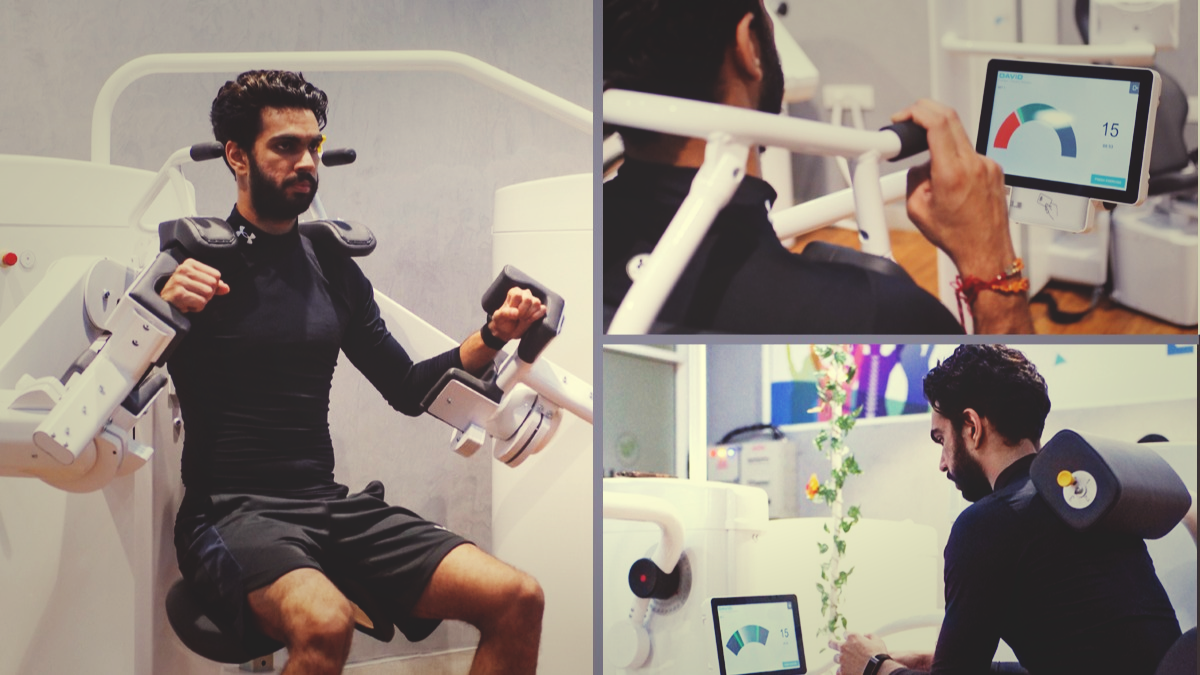
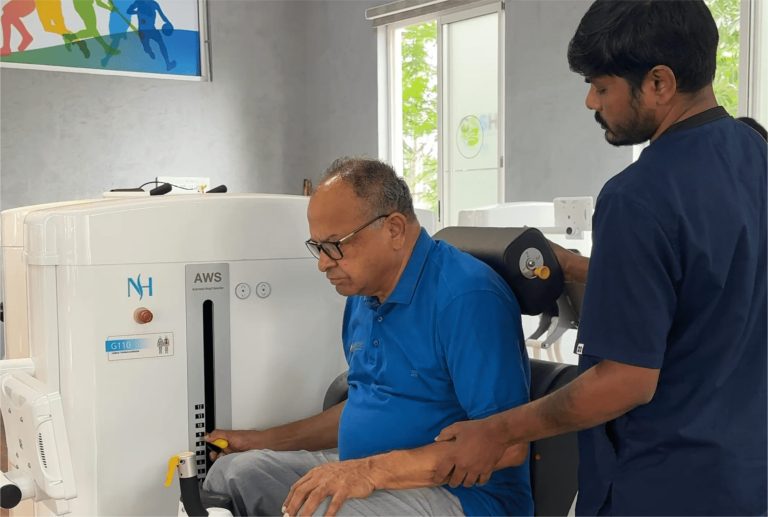
- Technology Support – Based on the requirement, we use motion analysis tools and high-end technology equipment like Nordic Health or David devices, which give data with exact values of your muscle imbalance.
- Personalized Feedback – You leave with a clear report and a tailored movement plan, focusing on prevention, performance, and longevity.
The CSSH Approach
At CSSH, musculoskeletal screening is not just confined to a checklist — it’s a movement health consultation. We combine expert observation with evidence-based practices, such as:
- Integrating findings into personalized exercise programs
- Offering hands-on manual therapy where needed
- Teaching movement techniques that fit one’s sport or daily life
- Tracking progress with periodic re-assessments
From the first session, we propose a clear, personalized movement health plan, focusing on prevention, performance, and long-term wellness.
Bottom Line:
Our body is our lifelong vehicle. A musculoskeletal screening is not just about finding problems, but about building a stronger, safer, and more capable version of oneself. At CSSH, we see it as the first step toward pain-free, confident movement for years to come. Your body moves you through life. A musculoskeletal screening ensures it keeps moving well.