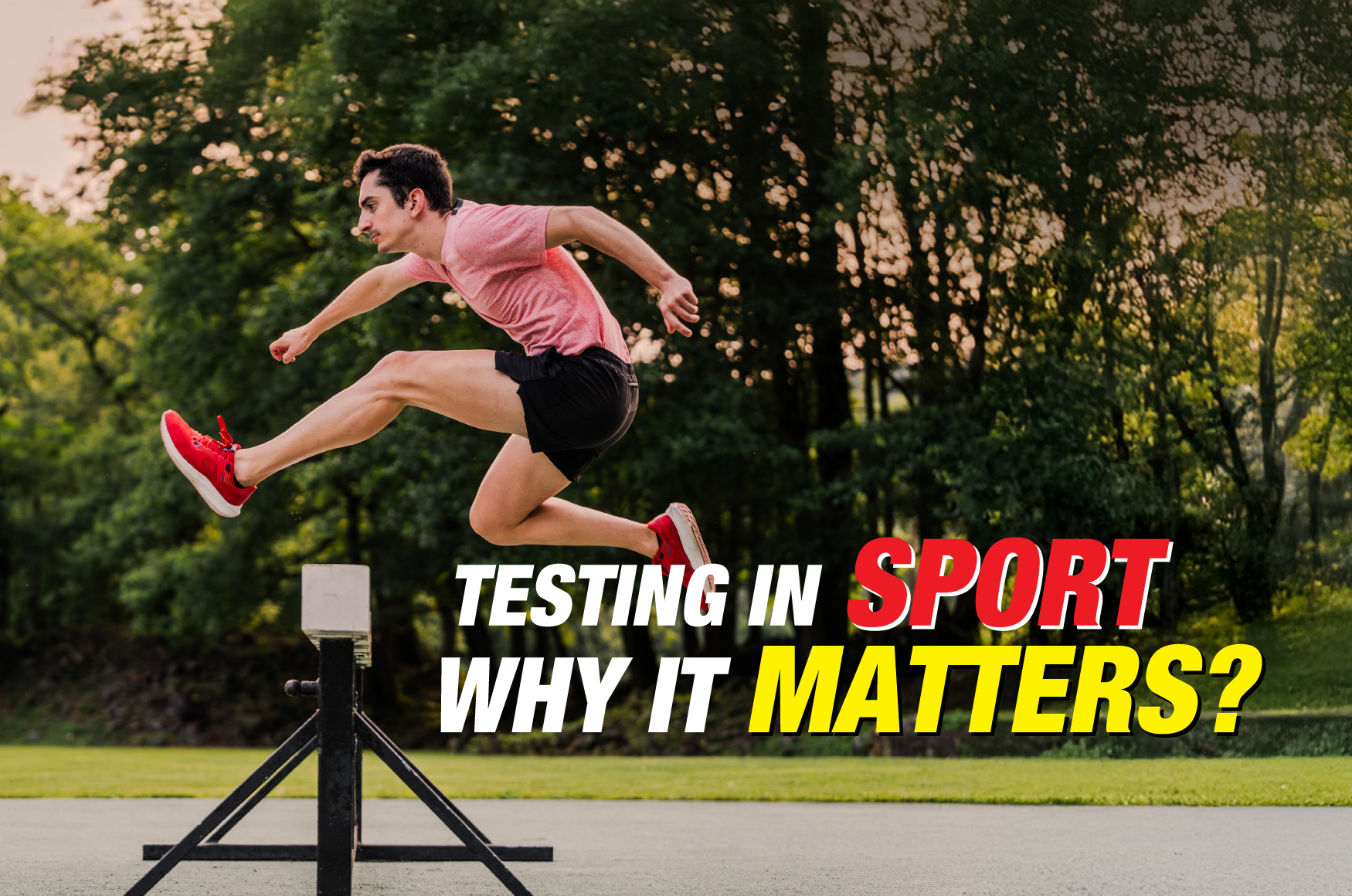
Testing is a foundational component of any effective sports performance system. It provides objective insights into an athlete’s physical capacities, bio motor abilities, movement quality, and readiness to train or compete.
In a structured sports environment, testing allows practitioners to move away from guesswork and toward evidence-based decision-making. By using reliable data, coaches and clinicians can design targeted injury-prevention and performance-enhancement strategies. While testing is widely used in elite sport, it can be adapted for athletes at all levels by selecting appropriate assessments. This supports performance development, guides training plans, and contributes to long-term athlete health.
Testing for Injury Prevention
From an injury prevention perspective, testing aims to identify potential risk factors based on current research and clinical understanding, rather than to predict injuries with certainty. Testing batteries are often individualised according to the athlete’s sport and competitive level. Common assessments focus on:
- Movement quality and control, using fundamental movement patterns
- Strength imbalances and asymmetries, identifying left–right or agonist–antagonist differences
- Range of motion and mobility, to assess joint health and movement restrictions
While some asymmetries are common, particularly in unilateral or racket sports, excessive imbalances may increase injury risk. Restricted mobility or poor movement control can also lead to compensatory strategies that place unnecessary stress on other tissues.
From a well-being standpoint, monitoring factors such as rate of perceived exertion (RPE), muscle soreness, and cognitive fatigue provides valuable insights into training load and recovery. When used correctly, testing encourages meaningful conversations between the athlete and coach, promotes timely interventions, and reduces injury risk.
Testing for Performance Enhancement
From a performance enhancement perspective, testing tracks an athlete’s progress across key physical qualities that underpin success in sport. These include strength, speed, agility, power, and respiratory capacity.
Testing methods vary by sport, goals, and resources. No single metric captures full performance; instead, results should be interpreted together to identify strengths, weaknesses, and targeted development needs.
Comparing current results with:
- Previous test data enables progress tracking.
- Normative or sport-specific benchmarks help determine where the athlete stands and what physical qualities are required to excel.
In essence, integrating collective test results into training keeps preparation specific, measurable, and matched to sport demands. This alignment drives focused improvement and clearly tracks progress.
Testing at the Center for Spine and Sports Health (CSSH)
At the Center for Spine and Sports Health, we offer comprehensive sports performance and injury risk assessments for both recreational and professional athletes. Our testing process includes detailed reporting, physiotherapy for injury recovery and return-to-sport, and performance training services.
We also utilise Nordic Health devices to assess maximal muscle strength, enabling us to identify deficits at the individual-muscle level. These insights form a key part of our injury prevention and rehabilitation protocols, supporting safer training progression and long-term athletic development.